I chose an article from August 2017 New Era, entitled Deciding to be Faithful, by Elder Enrique R. Falabella. I chose this article because of the appealing color design that stood out and the relatable photo that he picked with the ever lasting fields.
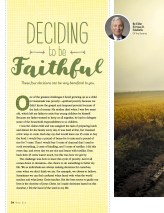
Typefaces – There are at least three different main typefaces in the article. In the title 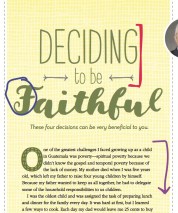 there is a sans serif font, you can tell because is don’t have any serifs. “Faithful” is in decorative-script hybrid font. It’s the cliche calligraphy that will go out of style soon. The actual article is in oldstyle font, you can tell because of the slanted serifs.
Elements – You can tell the body of the article is oldstyle by the moderate thick to thin ratio. You an tell the “Faithful” and
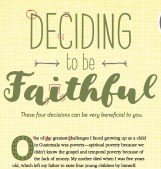 quotes are all decorative because of the common cliche theme that everyone is using now a days. You can tell that the other part of the title and sub titles and sans serif because they have no serifs with no transitions between lines showing no thick/thin ratio.
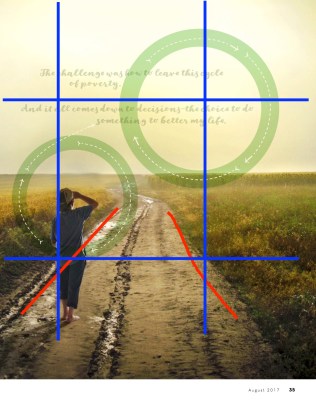
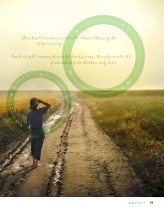
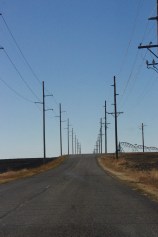
Photography – The most prominent design element in the main picture is the leading lines. The lines carry a lot os symbolism as well as weight in the photograph. The path starts out straight but ends up curving off in the distance so you can’t see the end. That simple curve makes the message more powerful because it’s a metaphor for our lives. We would be able to see the metaphor if the photo had shallow depth of field. Since the focus is open we can see everything in the photo. The picture also shows good rule of thirds. It separates the air, distance and land in three horizontal planes, one on top of another and also separate the path to be in the middle of the photo because it is the most powerful “statement” in the photograph.
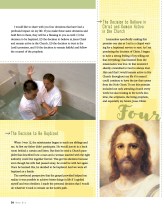
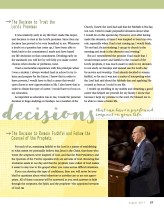
Design – The first thing you notice about the article is that the design flows form page to page. The first page and the second are connected through a photograph and the third and fourth pages are connected through a title text. The page is also very boxy, separating important messages into different areas to help put focus on what you’re reading
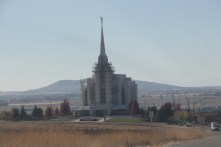
I took three photos that could replace the photo in the magazine. I tried replicating the leading lines in the first photo, the rule of third on the second photo and the third photo to show leading lines and depth of field.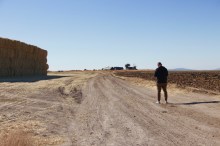
 Visual Design Blog